The first–and only–time I had mochi was at the original Fatty Crab restaurant in New York City’s West Village. I went to this place every chance I got, before it was nearly impossible to get in. There was a time when there were no dessert items on the menu, but you would receive a little mochi cake with the bill. I had never tasted anything so pillowy (some people call that “heavenly”), chewy, and crunchy, all in the same bite. I needed more.

Fast-forward many years later, and I finally baked a mochi cake of my own. I used , as featured in Gourmet Magazine’s May 2005 edition. Changes made: addition of 1 1/2 tablespoons sesame seeds sprinkled on the top of the cake batter, and sugar reduced to about 1 3/4 cups (simply because I ran out).

The result? Wonderful! Crunchy exterior, custardy and chewy on the inside. Next time: add more sesame seeds, try increasing sugar to 2 cups. They froze fairly well, though we’ll see how they hold up with a near two-week transit time to get to my brother in Afghanistan! They are very dense and satisfying, and great with a cup of tea in the evening.

20140302-122028.jpg

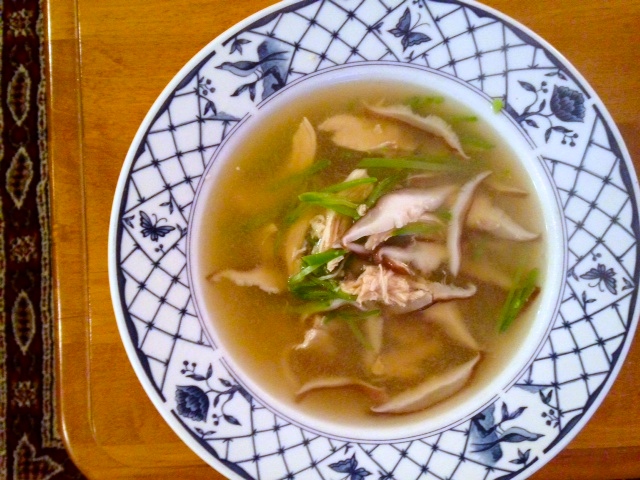
This is ridiculously easy, and can be altered in many ways. Don’t feel like making the broth? Use store-bought chicken or vegetable broth instead. Are you vegan? Omit the chicken altogether, or replace with tempeh or tofu, and omit the fish sauce. Feel free to substitute the shiitakes with any other mushroom, or the snow peas with snap peas. Don’t like miso? Well, that ingredient I suggest not to mess with; it adds a sweet-salty, mild “funk” that is hard to achieve with other products. If you follow a gluten-free diet, choose a miso paste made with soy beans and/or rice (not barley; they even make miso out of chickpeas!), and use Tamari soy sauce, which is made without wheat.

2 quarts Thai-inspired chicken broth
1/2 cup white miso
1 1/2 teaspoons fish sauce
1 1/2 tablespoons soy sauce
2 chicken breasts, shredded (reserved from the Thai-inspired chicken broth)
8 oz shiitake mushrooms, thinly sliced (tops only)
9 oz snow peas, thinly sliced
Sriracha, for garnish (optional, but recommended)

1. Bring Thai-inspired chicken broth to a boil, and then reduce heat to medium-low.
2. Stir in white miso, fish sauce, and soy sauce.
3. Add chicken, shiitake mushrooms and snow peas and cook for about 5 minutes, or until heated through.
4. Garnish with sriracha, if you feel so inclined (and you should).

photo 3

This is mostly a vegetable broth, since the chicken is cooked and then removed, to be used in the next recipe.

2 chicken breasts (with rib meat, skin-on, bone-in)
1 onion, halved, then each half cut into 3 wedges (root end intact)
2 carrots
4 stalks celery
3 large cloves garlic
1 3-inch knob ginger
1 small bunch fresh cilantro
Zest of 1 lime (large strips)
2 bay leaves
8 whole peppercorns

1. Combine all ingredients in a stock pot and cover with cold water.
2. Bring to just under a boil, reduce to a low simmer, and cook for about 15 minutes, or until the chicken breasts are cooked through.
3. Remove the chicken breasts and discard the skin. Remove the bones and add back to the pot.
4. Continue to cook for another 2 hours, skimming often.
5. Strain and refrigerate. Skim off any fat that coagulates on the surface before use.

photo 1

photo 2

Notes: add lemongrass. More ginger, more garlic, maybe more cilantro, maybe more lime. MORE. Fairly mild but yummy flavor.

DSCN0752

1 tablespoon canola oil
1 leek (or 1 small onion, or 2-3 shallots), thinly sliced
3 stalks celery, thinly sliced
1 heart of romaine lettuce, roughly chopped
1 cup brown rice, prepared according to package directions
1 bag kimchi
1 1/2 cups frozen peas
1/2 teaspoon fish sauce (omit to make it vegan)
1 teaspoon soy sauce (or Tamari, to make it gluten-free)

1. Heat oil in a pan over medium-high heat. Saute leeks and celery until soft, about 5 minutes.
2. Add romaine lettuce and cook for another 1-2 minutes, or until just wilted.
3. Add brown rice, kimchi, frozen peas and cook until heated through, about 5-7 minutes, stirring occasionally.
4. Stir in fish sauce and soy sauce and serve alongside fish, or alone as an entree. (I served it with tuna, which I encrusted with homemade gomasio–a seasoning of ground sesame seeds and salt–and seared.) Alternately you can top with a fried or poached egg for a savory, umami-rich breakfast or brunch (this is what I did with the leftovers).

Notes: YUM. Maybe add edamame, or garnish with sesame seeds.

DSCN0764

(Or, my first attempt at homemade nut milk.)

I’ve been hurtin’ for a blender for a while now (though, if you’d ask my boyfriend, he’d say, “We need another blending device?”). I finally invested in a Ninja, and damn! if it’s not one of the most fun tools I have played with in a while. I mean, come on–there are THREE BLADES, people! Two more blades to injure myself on (I am notoriously clumsy), but it makes for a pretty lethal toy for anything that enters the vessel.

The main motivator behind this purchase, besides the smoothie appeal (an immersion blender is only useful for blending soft things, and I was growing tired of banana-only beverages), was to make homemade nut milk. No, I do not consider myself one of “Those People” (though I do consider myself “hippie chic”). But the allure of making things at home that one would normally purchase is exciting to me. Sure, it’s a totally over-involved process, and does not save you an exorbitant amount money when it comes down to it, but it’s a great DIY project that beefs up your culinary chops. So why not give it a whirl (ha)?

1 cup sunflower seeds
3 Medjool dates, pits removed
1/8 tsp vanilla extract
Pinch kosher salt

Makes 1 quart (4 cups)

1. Cover sunflower seeds with cold water by 2 inches and soak overnight in the refrigerator.
2. Drain and discard the soaking water and place seeds in the blender.
3. Blend on high for 2 minutes, or until completely pureed.
4. Add dates, vanilla, and salt and whirl for another minute.
5. Strain the nut milk using a nut milk bag (I don’t have one of these…yet…so I used a fine mesh strainer, which worked okay–left a bunch of small bits. You can also try a few layers of cheesecloth)
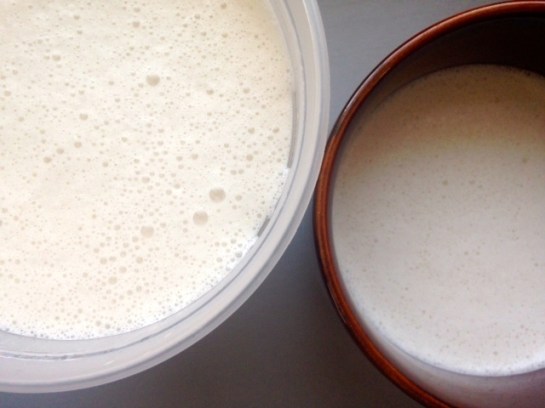
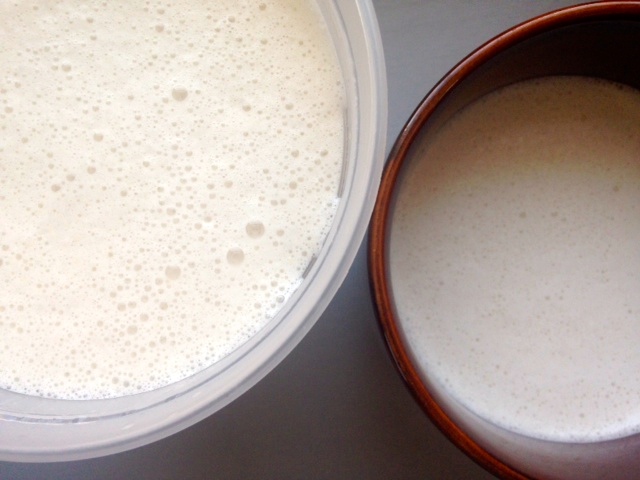
photo 1

I chose to start with sunflower seeds because they were the least expensive nut/seed I could find. They have a nice flavor, almost vegetal, which is great on its own, but I had fresh dates on hand and was in that kind of a mood. The end result was mildly sweet, which worked well with the hint of vanilla. Since the fine-mesh strainer wasn’t the greatest option (the little bits were strange, floating around in my coffee), I used the sunflower seed milk in my morning smoothies.

Many people bake the leftover strained meal (in most cases, almond) to use later in baked goods in place of flour. So I spread the sunflower seed meal onto a baking sheet and baked on very low for a very long time. It smelled gross. It looked strange. I must have done something terribly wrong.